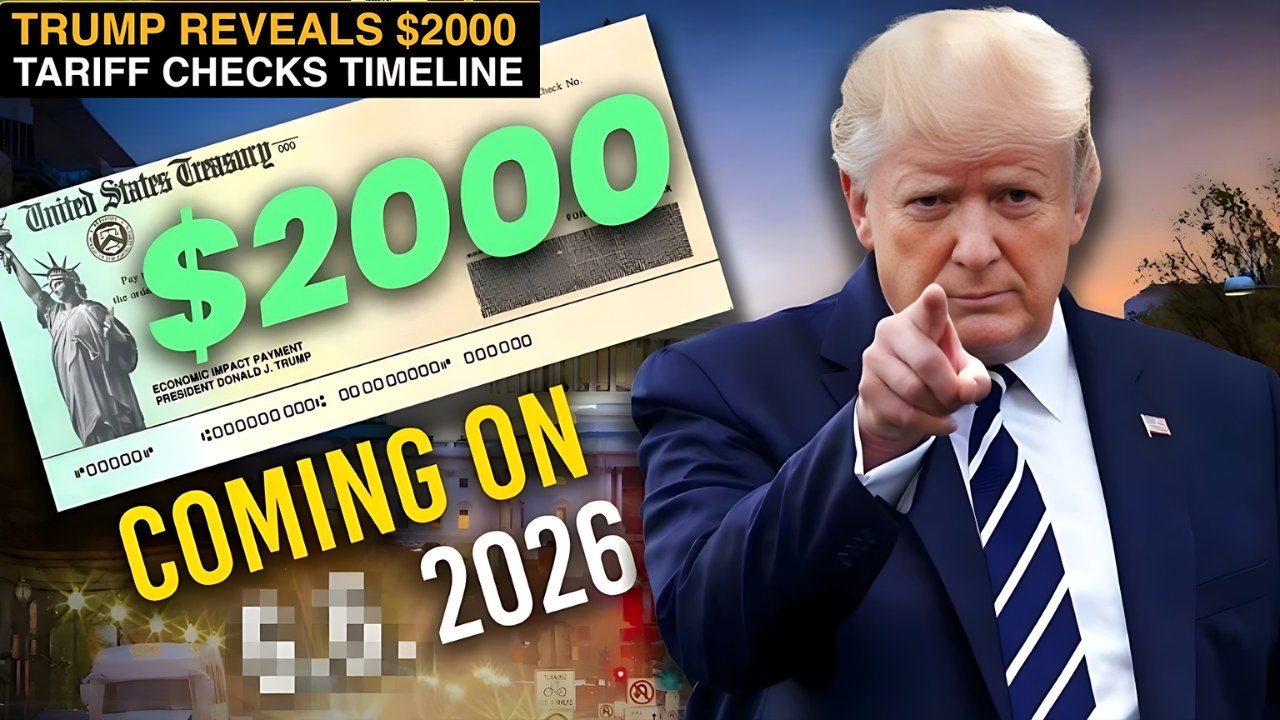
$2000 Tariff Checks Pushed to 2026: The nationwide buzz around the proposed $2000 tariff stimulus checks has intensified after former President Donald Trump publicly outlined a new timeline for the long-anticipated payments. Millions of Americans had hoped the checks would arrive before the end of 2025, but the updated schedule places the distribution well into 2026, prompting both excitement and uncertainty across the country.
| Category | Information |
|---|---|
| Payment Amount | $2000 per eligible American |
| Official Timeline | Mid to late 2026 (expected) |
| Holiday 2025 Release | Not happening |
| Funding Source | Tariff revenue collected by the government |
| Eligibility (Expected) | Low- and middle-income households; high-income earners may be excluded |
| Legislative Status | Requires Congressional approval; not yet finalized |
| Distribution Method | Likely direct payment or tax-based payout (not confirmed) |
| Major Hurdles | Legislative disagreements, tariff revenue limitations, logistical setup |
| Political Impact | May influence public sentiment before 2026 midterm elections |
| Current Public Sentiment | High anticipation and uncertainty |
Checks Delayed Beyond Holiday Season
Trump made it clear that the payments will not be issued during the upcoming holiday season, despite growing speculation. Instead, he emphasized that logistical, legislative, and revenue-related challenges make an early rollout impossible. The administration’s working plan now targets mid-2026 as the earliest realistic date for citizens to begin receiving the tariff-funded relief.
What the $2000 Tariff Stimulus Means
The proposed $2000 payments are part of Trump’s “tariff dividend” strategy, which aims to return funds collected from tariffs to American households. Unlike traditional stimulus checks that draw from federal spending, this initiative is framed as a distribution of tariff revenue generated through trade policy. Trump has repeatedly promoted the idea as a way to reward Americans while maintaining fiscal discipline.

Eligibility Expected for Middle-Income Households
While the official eligibility criteria have not yet been finalized, early statements suggest the payments will be targeted toward individuals and families earning within low- to middle-income brackets. The administration has indicated that higher-income households may be excluded to ensure the dividend benefits those most impacted by economic pressures.
Legislative Approval Still Required
Despite the growing public interest, the plan remains in a preliminary phase. Congress must approve the proposal before any payments can be issued. Lawmakers continue to debate whether tariff revenue should be distributed directly to citizens or reserved for national debt reduction. This disagreement poses a major hurdle to the plan’s implementation.
Concerns Over Revenue and Logistics
Economists and policy analysts have raised questions about whether tariff revenue alone can sustain such a large-scale payment program. Even with aggressive tariff collection, the total amount needed to fund $2000 checks for millions of Americans is substantial. Additionally, the government would need to establish a secure and efficient system for processing and distributing payments.

Political Implications Ahead of 2026 Elections
The new timeline places the anticipated payout close to the 2026 midterm elections, adding a layer of political significance. Supporters argue that the checks demonstrate Trump’s commitment to economic relief, while critics suggest the timing may be strategically designed to influence voter sentiment.
What Americans Should Expect Next
For now, Americans should expect continued updates as the plan moves through legislative channels. While public anticipation remains high, the timeline, funding model, and eligibility rules are still in development. Trump has assured supporters that the payments are a priority, but their arrival ultimately depends on congressional cooperation and economic feasibility.

 Join WhatsApp